Also known as: Schenkl shell, Schenkl shot.
| Class | Rifled-artillery projectile family |
|---|---|
| Inventor | John P. Schenkl |
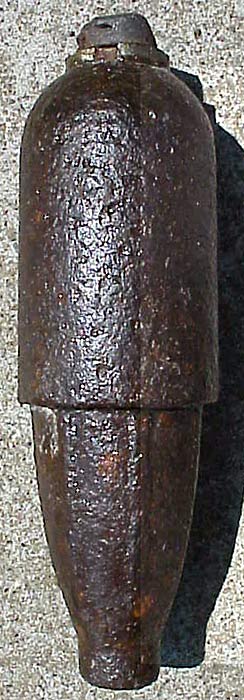
| Characteristic feature | Tapered rear cone for an expanding papier-mache sabot |
| Forms | Shell, case shot, and related projectile variants |
| Fuze relationships | Schenkl percussion and combination fuzes |
Expanding sabot
Gillmore's Fort Pulaski report illustrated the Schenkl body terminating in a cone. A papier-mache wad moved forward on the cone and expanded into the rifling; after leaving the bore, the expendable material separated from the projectile.
Fuzes and linked patents
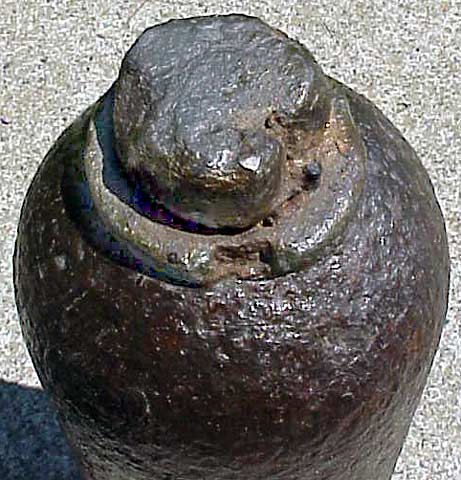
Schenkl projectiles and Schenkl fuzes are related but separate entities. John P. Schenkl's 1862 patent covered a time-and-concussion fuze arrangement; projectile bodies, sabot forms, and specific fuze patterns should each retain their own records and relationships.
Sources & further reading
- Gillmore, Quincy A. Official Report to the United States Engineer Department, of the Siege and Reduction of Fort Pulaski, Georgia, February, March, and April, 1862. New York: D. Van Nostrand, 1862.
- John P. Schenkl. Improvement in Time and Concussion Fuses for Shells. U.S. Patent 35,897, July 15, 1862.
- Whittemore, James M., and F. Heath. Ammunition, Fuses, Primers, Military Pyrotechny, Etc. Ordnance Memoranda No. 21. Prepared under Brig. Gen. Stephen V. Benet. Washington: Government Printing Office, 1878.
- Hackley, Frank W. Civil War Explosive Ordnance. Revised November 10, 1960. U.S. Naval School, Explosive Ordnance Disposal.